
Scientific Proof to How your Body react to Acupuncture - Cancer Pain
Frequent sessions of Acupuncture can treat Cancer Pain.

Pain is one of the most distressing and prevalent symptoms accompanying cancer. It is typically chronic and persistent, hinders patients’ daily activities such as sleep, emotional well being and social interactions and significantly impairs their quality of life.
Cancer pain can be classified into two primary categories: the first being the pain that arises directly from tumor growth or metastasis, and the second being the pain that may arise during cancer treatment, which includes radiotherapy, surgery, chemotherapy, or hormonotherapy.
The World Health Organization (WHO) promotes a three-tiered analgesic approach for managing cancer pain, which begins with non-opioid analgesics, advances to weak opioids, and ultimately escalates to strong opioids if required. Nevertheless, there is a correlation between higher pain intensity and the strength of the analgesics prescribed. Extended use of pain medication results in reduced effectiveness. Furthermore, the side effects linked to opioid usage may encompass a variety of uncomfortable and potentially severe conditions, such as constipation, nausea, vomiting, dizziness, pruritus, confusion or delirium, and in extreme cases, respiratory depression. These negative effects can significantly diminish patients' quality of life and may require additional therapeutic and management interventions.
In line with increasing clinical evidence of alternative therapies, leading medical organizations recommend the use of non-pharmacological interventions, including acupuncture. Acupuncture is also recommended by the adult cancer pain clinical guidelines of the National Comprehensive Cancer Network as a complementary treatment for cancer pain alongside medication.
Below are the scientific papers that support the fact that acupuncture treats cancer pain.
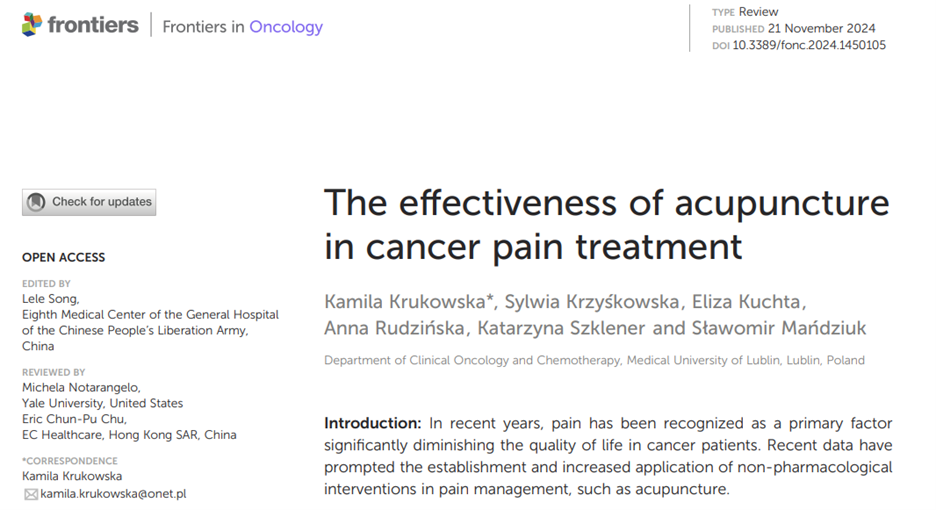
Conclusion: Acupuncture is capable of reducing cancer pain, better control pain, decrease analgesic intake, and significantly improve patients’ quality of life.
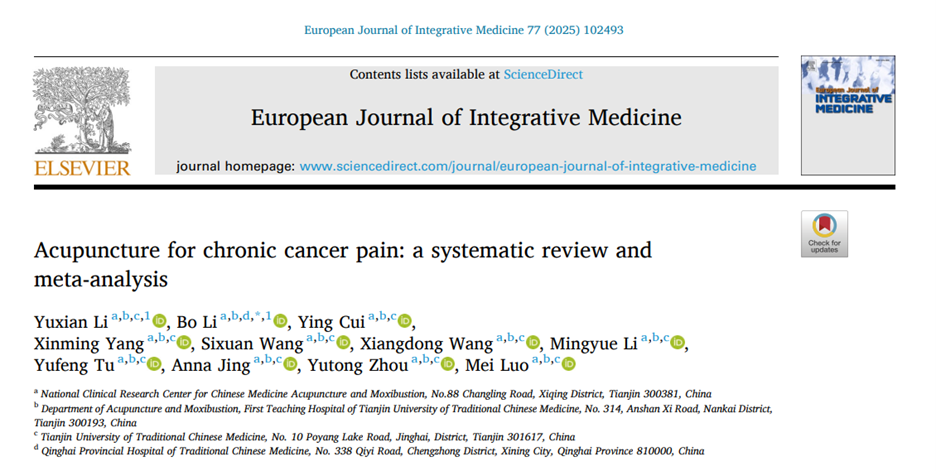
Conclusion: Acupuncture and Traditional Chinese medicine are the best intervention for combination of different traditional methods in the treatment of cancer pain.
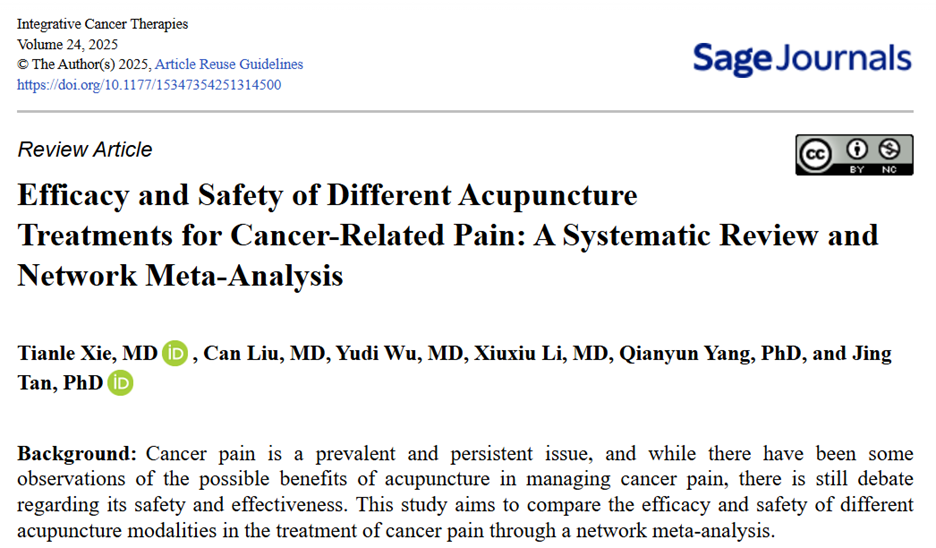
Conclusion: The integration of acupuncture with analgesic drugs has demonstrated considerable potential to significantly mitigate pain and ameliorate adverse effects of analgesics in patients with chronic cancer pain.
Further reading:
Everything you need to know about Acupuncture
Scientific Proof to how your body reacts to Acupuncture - Facial Tightening
Scientific Proof to how your body reacts to Acupuncture - Eczema
Scientific Proof to how your body reacts to Acupuncture - Plantar Fascitis
Scientific Proof to how your body reacts to Acupuncture - Sinusitis
Scientific Proof to how your body reacts to Acupuncture - Snoring
Scientific Proof to How your Body reacts to Acupuncture - Stress Management
Scientific Proof to How your Body reacts to Acupuncture - Sciatica
Scientific Proof to How Your Body React to Acupuncture - Memory Decline
Scientific Proof to how your body reacts to Acupuncture - Neck and Shoulder Aches and Pain
Scientific Proof to how your body reacts to Acupuncture - Urinary Incontinence
