Scientific Proof to How your Body react to Acupuncture - Dry Eye Disease
Regular sessions of Acupuncture can treat all forms of Dry Eye Diseases.

Although Dry Eye Disease is not a life-threatening disease, it is one of the most common and irritating conditions in ophthalmology. Dry eye disease is not just a simple ocular discomfort due to deficiency or hyper evaporation of tears but a multifactorial disease resulting in ocular discomfort and visual disturbances due to tear-film instability, hyper-osmolarity and chronic inflammation of the ocular surface.
The incidence of Dry Eye Disease is now more prevalent and increasing more rapidly than other ophthalmologic diseases such as cataracts, retinal disease and glaucoma. This may be related to an increase in average life expectancies, environmental pollution, and adverse events of various ophthalmologic medical interventions such as LASIK, cataract or refractive surgeries and use of medications such as antihistamines.
Artificial tears that serve to supplement the natural tear film are the first-line therapy for all forms of Dry Eye Disease. Yet, significant unmet medical need remains for many patients who continue to experience symptoms despite treatment.
Numerous clinical studies have shown that acupuncture is beneficial in treating DED, either as an independent or adjunct intervention. Here are some of them.
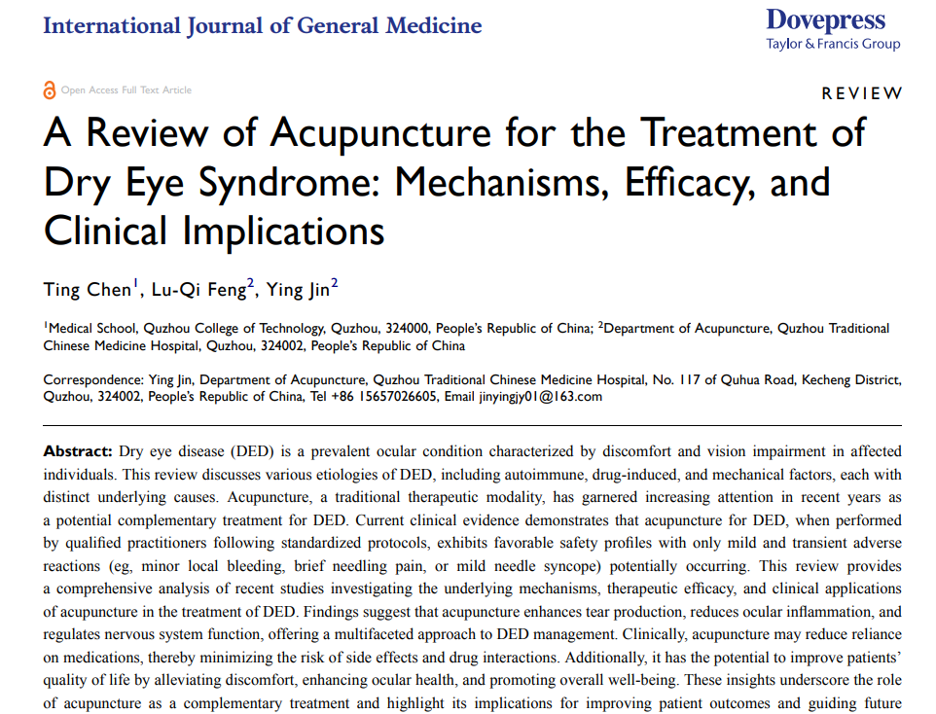
Conclusion: Acupuncture enhances tear production, reduces ocular inflammation, and regulates nervous system function, offering a multifaceted approach to Dry Eye Disease management. Clinically, acupuncture may reduce reliance on medications, thereby minimizing the risk of side effects and drug interactions. Additionally, it has the potential to improve patients’ quality of life by alleviating discomfort, enhancing ocular health, and promoting overall well-being.
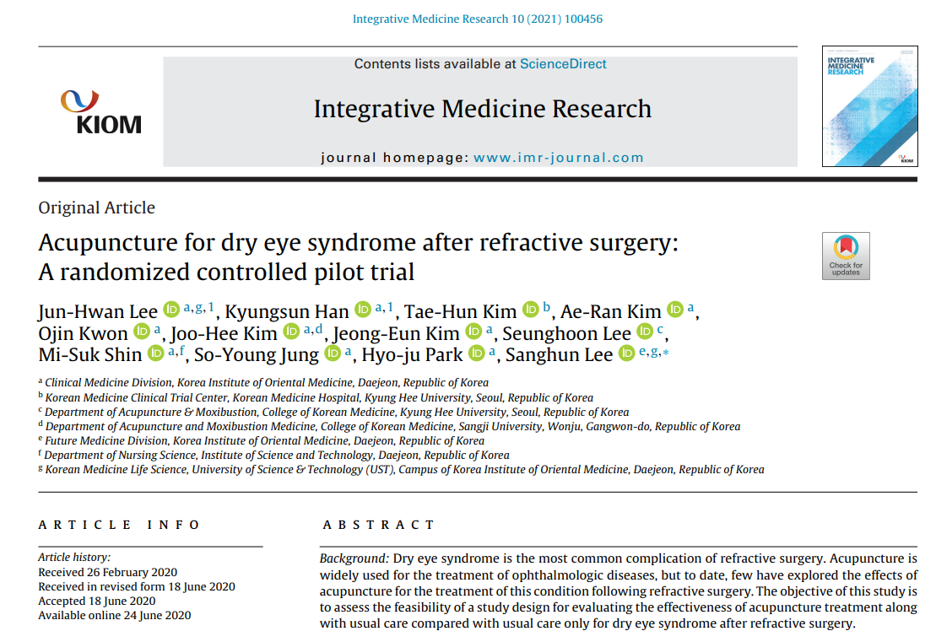
Conclusion: Four weeks of acupuncture treatment in addition to usual care is a feasible treatment for dry eye syndrome after refractive surgery.
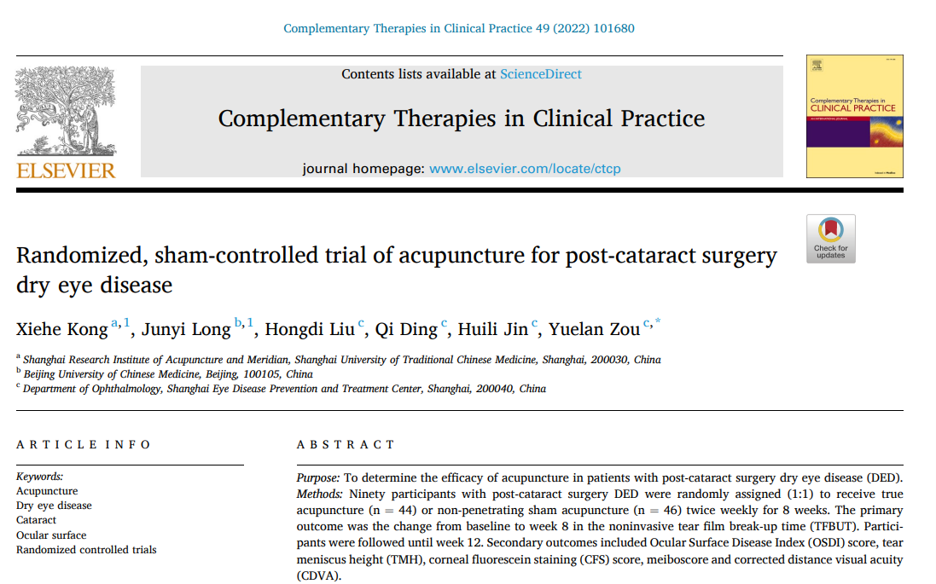
Conclusion: Among patients with post-cataract surgery DED, acupuncture compared with sham acupuncture resulted in statistically significant benefit on tear film stability.
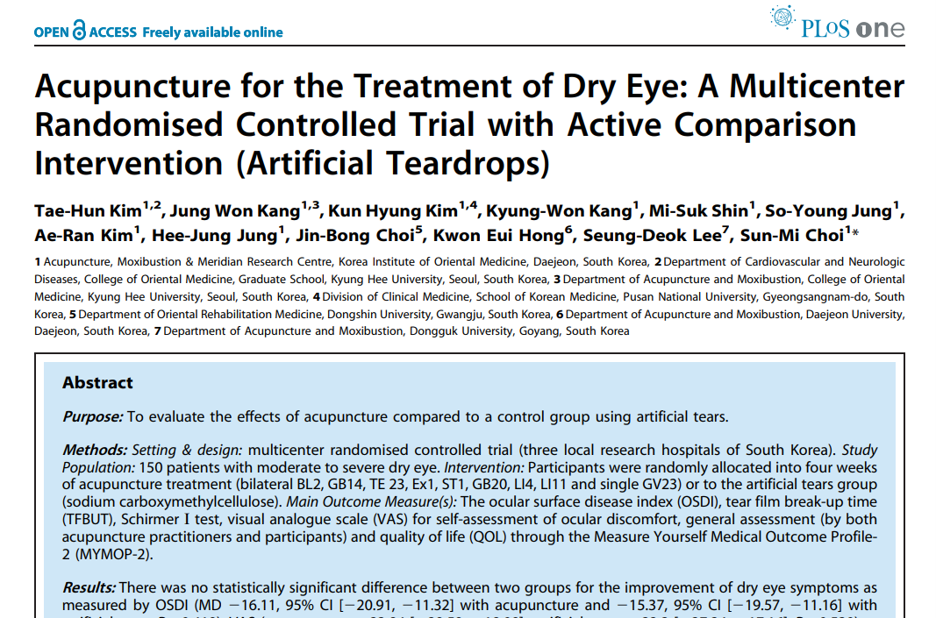
Conclusion: Acupuncture has benefits on the mid-term outcomes related to dry eye syndrome compared with artificial tears.
Further reading:
Everything you need to know about Acupuncture
Scientific Proof to how your body reacts to Acupuncture - Facial Tightening
Scientific Proof to how your body reacts to Acupuncture - Eczema
Scientific Proof to how your body reacts to Acupuncture - Plantar Fascitis
Scientific Proof to how your body reacts to Acupuncture - Sinusitis
Scientific Proof to how your body reacts to Acupuncture - Snoring
Scientific Proof to How your Body reacts to Acupuncture - Stress Management
Scientific Proof to How your Body reacts to Acupuncture - Sciatica
Scientific Proof to how your body reacts to Acupuncture - Neck and Shoulder Aches and Pain
Scientific Proof to how your body reacts to Acupuncture - Urinary Incontinence
